YOU ARE HERE Home > Blogs > FAQ on E Way Bill (Specifically for Transporter)
FAQ on E Way Bill (Specifically for Transporter)
GST DOST's BLOG
| Resource | Chapter 33 |
| Resource | GST Discussion |
Q.1 Why the transporter or truck owner needs to enroll on the E-Way Bill (EWB) system?
Truckers Services are exempted from GST assuing providing truck on hire to GTA. However provision of service by Goods Transport Agency (GTA) is taxable but party paying freight are liable to pay tax under reverse charge mechanism (RCM) in most of the cases. Further CGST Notification 05/2017-Central Tax allowed GTA to get exemption from registration in case GTA provide service ONLY TO PARTIES who are liable to pay GST on freight under reverse charge. Henceforth there are number of truck owner as well as GTA who don't have GST Number.
E-Way Bill Era
Now the movement of goods from one place to another place can't be possible without E-Way Bill wherever EWB applicable and in case of movement of goods by road or any other mode, Part B of the EWB requires vehcile number. If the truck owner or transporter cause the movement of goods for their clients, they are required to update the vehicle number for EWB. Hence, they need to enroll on the EWV portal and generate the 15 digits Unique Transporter Id, whihc is popularly known as Enrollment Number.
Q.2 Which document shall be carried by the person in-charge of the conveyance?
The person in charge of conveyance shall carry the invoice or bill of supply or delivery challan, as the case may be ; and a copy of the e-way bill or the e-way bill number generated from the common portal, whervever applicable. Requirement of Radio Frequency Identification Device (RFID) or Invoice Reference Number (IRN) is not universally applicable now across all the states and UT in India.
Q.3 Whether E-Way Bill (EWB) is required for all the goods that are being transported?
The EWB is requireds to transport all the taxable goods where the value of the goods exceeding Rs 50000/-. However there is an exception for 154 goods for which E-Way Bill Not been required.
Q.4 Is it possible to transport the goods with the E-Way Bill (EWB) without vehicles details in it?
Yes,
But only in case where the goods are transported for a distance of less than 10-kilometers within the State from the place of business of consignor to the place of transporter for further transportation.
Q.5 When is the generation of E-Way Bill by a transporter mandatory in case consignor or the consignee has not generated e-way bill? And how the same shall be generated?
In case the value of goods carried in the conveyance is more than Rs 50000/-, generation of E-Way Bill is mandatory for transporter. The transporter shall generate Form GST EWB-01 on the basis of invoice or bill of supply or delivery challan, as the case may be, and may also generate a consolidated e-way bill in Form GST EWB-02 on the portal prior to the movement of goods.
Q.6 How does transporter come to know that particular E-Way Bill (EWB) is assigned to him?
The transporter comes to know the EWBs assigned to him by the taxpayers for transportation, in one of the following ways:
1. The transporter can go to reports section and select ‘EWB assigned to me for trans’ and see the list.
2. The transporter can go to ‘Update Vehicle No’ and select ‘Generator GSTIN’ option and enter taxpayer GSTIN, who has assigned or likely to assign the EWBs to him.
3. The tax payer can contact and inform the transporter that the particular EWB is assigned to him.
Q.7 What is Part B and Whether Part-B is must for E-Way Bill (EWB)?
Part-B contains the detail of Vehilce Number in which goods is moved from one place to another place. Part-B is a must for the EWB for movement purpose. EWB is complete only when Part-B is entered. Otherwise printout of EWB says it is invalid for movement of goods.
Q.8 Who all can update the vehicle number for the E-Way Bill (EWB)?
The EWB is not valid without the vehicle number updated on the common portal, if on the mode of transport is the road. The Vehicle number can be updated by the generator of the EWB or the transporter assigned for that EWB by the generator.
Q.9 Can Part-B of E-Way Bill (EWB) be entered by any transporter?
Part-B can be entered only by the generator of the EWB and transporter assigned in it.That is,the generator of EWB indicates who is authorized to move the goods by entering his transporter ID. Only such transporter can login and update the Part-B.
Q.10 How many times can Part-B or Vehicle number be updated for an E-Way Bill (EWB)?
The user can update Part-B (Vehicle details) as many times as he wants for movement of goods to the destination. However, the updating should be done within the validity period.
Q.11 Can Part-B entry be assigned to another transporter by authorized transporter?
Part-B can be entered by the transporter assigned in the E-Way-Bill or generator himself. But the assigned transporter cannot re-assign to some other transporter to update Part-B on the E-Way-Bill system.
Q.12 Is there any validity period for E-Way Bill (EWB)?
Yes.
Validity of the E-Way Bill or Consolidated E-Way Bill depends upon the distance the goods have to be transported. The validity is one day upto 100 km and for every 100 km or part thereafter it is one additional day from the relevant date.
Table
|
Sr. no. |
Distance |
Validity period |
|
(1) |
(2) |
(3) |
|
1. |
Upto 100 km |
One day |
|
2. |
For every 100 km or part thereof thereafter |
One additional day |
Please remember that the "relevant date" shall mean the date on which the e-way bill has been generated and the period of validity shall be counted from the time at which the E-way bill has been generated. Each day shall be counted as twenty-four hours.

Q.13 When does the validity of the E-Way Bill (EWB) start?
The validity of the e-way bill starts when first entry is made in Part-B. That is, vehicle entry is made first time in case of road transportation or first transport document number entry in case of rail / air / ship transportation, whichever is the first entry. It may be noted that validity is not re-calculated for subsequent entries in Part-B.
Q.14 What has to be done, if the validity of the E-Way Bill (EWB) expires?
If validity of the EWB expires, the goods are not supposed to be moved. However, under circumstance of ‘exceptional nature’, it can be extended by the Commissioner of the state. The procedure for the same will not notified till December 2017.
Q.15 What is the validity of Consolidated E-Way Bill (EWB) ?
Consolidated EWB is like a trip sheet and it contains details of different EWBs which are moving towards one direction, and these EWBs will have different validity periods. Hence, Consolidated EWB is not having any independent validity period. However, individual EWBs in the Consolidated EWB should reach the destination as per its validity period.
Q.16 If there is a mistake or wrong entry in the E-Way Bill, what has to be done?
If there is mistake, incorrect or wrong entry in the Part A of EWB and EWB generated, then it cannot be edited or corrected. But you have an option to cancealled the EWB on the ground that the goods are not transported as per the details furnished in the EWB. But cancellation is possible only within 24 hours of generation of the EWB.
Q.17 If the vehicle in which goods are being transported having E-Way Bill (EWB) is changed, then what has to be done?
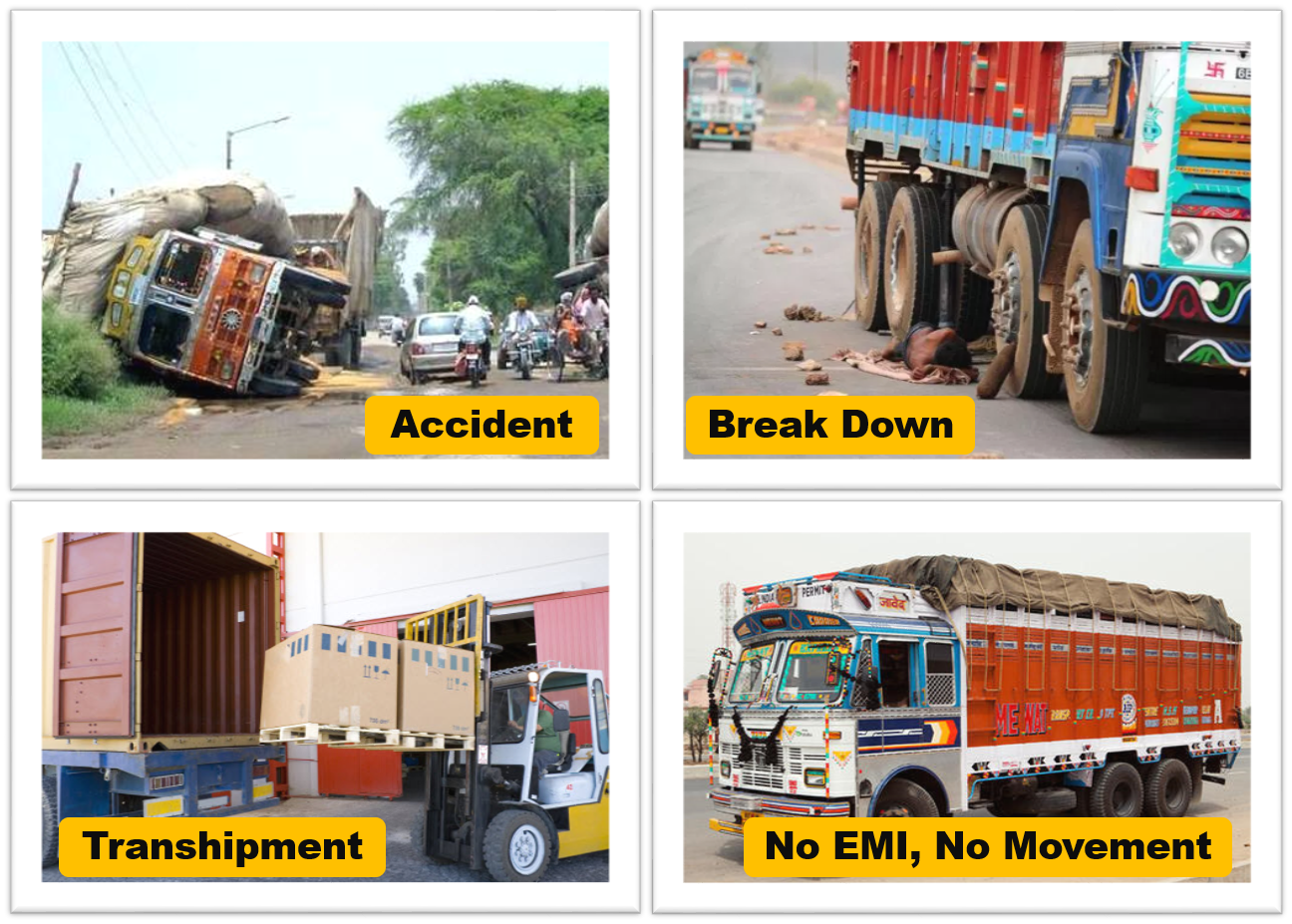
Part B of the EWB should have the vehicle number that is actually carrying the goods. But there may be situations when it is being required that goods have to be shifted to another vehicle like transshipment, breakdown of the vehicle, accident of the vehicle, financer take the control of the vehicle due to non-payment of EMI etc. and this can be happened at any time after generation of EWB but before delivery of the goods.
In such cases, if the goods shifted to another vehicle, then the transporter or generator of the EWB has to update the changed vehicle number.
Q.18 Whether the E-Way Bill (EWB) can be cancelled or deleted? if yes, under what circumstances?
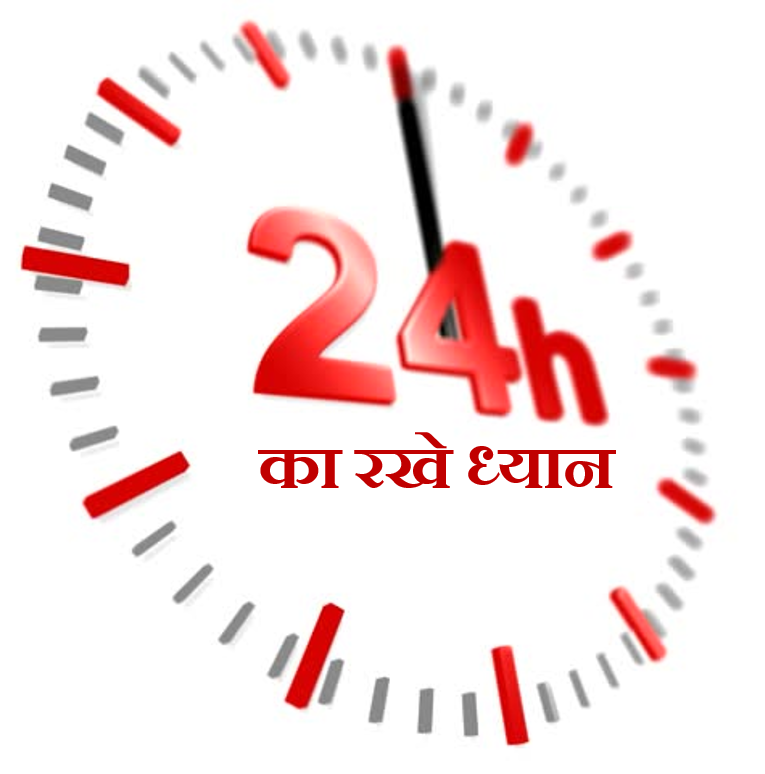
Yes. E-way bill can be cancelled if either goods are not transported or are not transported as per the details furnished in the EWB. However, it can be cancelled by the generator within 24 hours of generation.
Q.19 What has to be done to the E-Way Bill (EWB), if the vehicle breaks down?
If the vehicle breaks down when the goods are being carried with EWB, then the transporter can cause to repair the vehicle and continue the journey. If he is going to change the vehicle, then he has to enter the new vehicle details for that E-Way Bill on the web-site using ‘Update vehicle number’ option and continue the journey with new vehicle.
Q.20 What has to be done by the transporter if consignee is refuses to take goods or rejects the goods for quality reason?
There is a chance that consignee or recipient may reject to take the delivery of consignment due to various reasons. Under such circumstance, the transporter can get one more e-way bill generated with the help of supplier or recipient by indicating supply as ‘SalesReturn’ and with relevant document details and return the goods to supplier as per his agreement withhim.
Q.21 How to generate E-Way Bill (EWB), if the goods of one invoice is being moved in multiple vehicles simultaneously?
Where the goods are being transported in a semi-knocked-down (SKD) or completely-knocked-down (CKD) condition the EWB shall be generated for each of such vehicles based on the delivery challans issued for that portion of the consignment and;
(a) The supplier shall issue the complete invoice before dispatch of the first consignment;
(b) The supplier shall issue a delivery challan for each of the subsequent consignments, giving reference of the invoice;
(c) Each consignment shall be accompanied by copies of the corresponding delivery challan along with a duly certified copy of the invoice; and
(d) The original copy of the invoice shall be sent along with the last consignment
Please note that multiple EWBs have to generate under this circumstance. That is, the EWB has to be generated for each consignment based on the delivery challan details along with the corresponding vehicle number.
Q.22 If the goods having E-Way Bill (EWB) has to pass through transhipment and through different vehicles, how it has to be handled?
Some of the consignments are transported by the transporter through transhipment before it is delivered to the recipient at the place of destination. Hence for each movement from one place to another, the transporter needs to update the vehicle number in which he is transporting that consignment.
Q.23 How to handle the goods which moves through multiple transhipment places?
Some of the consignments move from one place to another place till they reach their destinations. Under this circumstance, each time the consignment moves from one place to another, the transporter needs to enter the vehicle details using ‘Update Vehicle Number’ option, when he starts moving the goods from that place or the transporter can also generate ‘ConsolidatedEWB’ with the EWB of that consignment with other EWBs and move to the next place.This has to be done till the consignment reaches destination.But it should be within the validityperiod of EWB.
Q.24 How to enter multiple modes of transportation, i.e., road, rail, ship, air for the same E-Way Bill (EWB)?
One E-Way Bill can go through multiple modes of transportation before reaching the destination. As per the mode of transportation, the EWB can be updated with new mode of transportation by using ‘Update VehicleNumber’. Let us assume the goods are moving from Cochin to Chandigarh through road, ship, air and road again. First, the tax payer generates the EWB by entering first stage of movement (by road) from his place to ship yard and enters the vehicle number. Next, he will submit the goods to ship yard and update the mode of transportation as Ship and transport document number on the EWB system. Next, after reaching Mumbai, the taxpayer or concerned transporter updates movement as road from ship to airport with vehicle number. Next the tax payer or transporter updates, using ‘update vehicle number’ option, the Airway Bill number. Again after reaching Delhi, he updates movement through road with vehicle number. This way, the e-way bill will be updated with multiple mode of transportation.
Q.25 What is consolidated E-Way Bill (EWB)?
Consolidated E-Way Bill (EWB) is a document containing the multiple EWB for multiple consignments being carried in one conveyance (goods vehicle). That is, the transporter, carrying the multiple consignments of various consignors and consignees in one vehicle is required to carry one consolidated EWB instead of carrying multiple EWBs for those consignments.
Q.26 Who can generate the consolidated E-Way Bill (EWB)?
A transporter can generate the consolidated E-Way Bill (EWB) for movement of multiple consignments in one vehicle.
Q.27 How to generate E-Way Bill (EWB) for multiple invoices belonging to same consignor and consignee?
If multiple invoices are issued by the supplier to recipient, that is, for movement of goods of more than one invoice of same consignor and consignee, multiple EWBs have to be generated. That is, for each invoice, one EWB has to be generated, irrespective of same or different consignors or consignees are involved. Multiple invoices cannot be clubbed to generate one EWB. However after generating all these EWBs, one Consolidated EWB can be prepared for transportation purpose, if they are going in one vehicle.
Q.28 How does the transporter handle multiple E-Way Bills (EWB) which pass through transshipment from one place to another in different vehicles to reach the destinations?
Some of the transporters move the consignments from one place to another place as per the movement of vehicles. Sometimes the consignments move to 8-10 branches of the transporter before they reach its destination. The consignments reach the particular branch of transporter from different places in different vehicles and again these consignments will be sorted out to transport to different places in different vehicles. Now, the concerned branch user instead of updating the vehicle for each one of the EWBs, he can generate ‘Consolidated EWB’ for multiple EWBs which are going in one vehicle towards next branch/destination. This will simplify the managing of the EWBs and data entry.
Q.29 What are the contents of Part A of E-Way Bill (EWB)?
E-Way Bill PART-A requires following information to be provided:
E-Way Bill
|
PART-A |
|
|
|
A.1 |
GSTIN of Recipient |
|
|
A.2 |
Place of Delivery |
|
|
A.3 |
Invoice or Challan Number |
|
|
A.4 |
Invoice or Challan Date |
|
|
A.5 |
Value of Goods |
|
|
A.6 |
HSN Code |
|
|
A.7 |
Reason for Transportation |
|
|
A.8 |
Transport Document Number |
|
|
PART-B |
|
|
| B |
Vehicle Number |
|
Q.30 What has to be entered in GSTIN column of Part A of E Way Bill (EWB), if consignor or consignee is not having GSTIN?
If the consigner or consignee is unregistered tax payer and not having GSTIN, then user has to enter ‘URP’ [Unregistered Person] in corresponding GSTIN column.
Q.31 Whether verification of document and conveyance is possible during movement of goods and who has power to do the same?
Yes
(1) Any authorised GST Officer has right to intercept any conveyance to verify the E-Way Bill for all inter-State and intrastate movement of goods.
(2) The physical verification of conveyances shall be carried out only by the authorised Officer.

CBIC Notifies New Rule 14A – Quick GST Registration Option for Small Taxpayers [News]
[News]
GST Summons Is Not a Punishment — Don’t Panic Before the Law Does [Blog]
Yes, Police Can Attach Bank Accounts in GST Cases. But Only If They Follow the Law [Blog]
Gujarat HC says:“Phone calls don’t count as hearings!”Know your rights under Sec 75(4) [Video]
Know GST Rate of HSN 3926 | GST DOST [Video]

GST DOST, formerly known as My Service Tax, is a specialist GST firm led by experienced professionals — including CA, CS, MBA, and Advocates.
We are fluent in the ever-evolving GST regime and ensure accurate, timely, and actionable advice. Our strength lies not just in technical depth but in the use of AI tools and behavioural intelligence to ensure our clients feel informed, assured, and genuinely supported at every stage.

Powered by: RNJ Consultancy Services